I am intrigued with this blog thing and want to try it out myself. My name is Mark Gaulding and I live in Palm Desert, CA. I love books, music, theater, film, food, animals, travel. Oh, and did I mention books? I hope to hear from you!
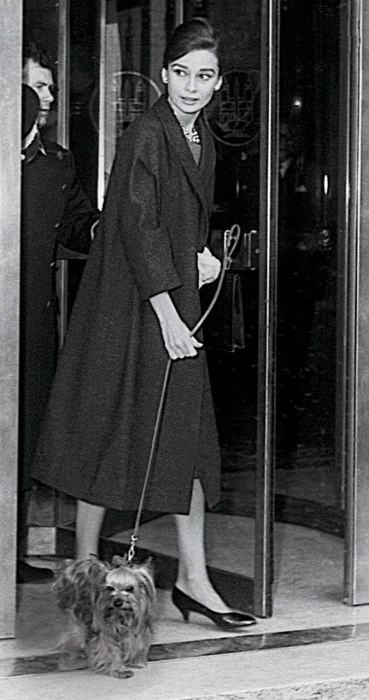
It's really hard to narrow down the most beautiful screen actress of all time......there have been so many stunningly beautiful women. But one, Audrey Hepburn, had a presence, a serenity, a magnetism, that the others were only second too.
I have always been obsessed with Audrey Hepburn, since I was a little kid. I watch Breakfast At Tiffany's every six months or so. This is the most quintessential Hepburn film of all. It evoked the sophistication and uniqueness of the actress.
Today is the actress' birthday. She would have been 84 years old.
Vanity Fair has a great article about the actress with great photos. The article is titled: "Audrey Hepburn’s Roman Street Style: from outdoor cafés to sporty convertibles, the Roman sites and scenes frequented by Audrey Hepburn, resident of the Eternal City." (see the cover article, click here)
Please see an earlier blog posting on Breakfast At Tiffany's: click here.
Richard Avedon-Master Photographer "Avedon Fashion: 1944-2000" A New Retrospective running at the International Museum of Photography in New York through Sept 6
Dovima with Elephants Dress by Dior, Cirque d'Hiver, Paris, August 1955 (c) 2009 The Richard Avedon Foundation
Audrey Hepburn With Art Buchwald with Simone, Frederick Eberstadt, Barbara Mullen and Dr. Regina, Maxim's, Paris, July 1959
One of my favorite authors is Truman Capote. One of my favorite stories of Capote's is Breakfast at Tiffany's. And one of my favorite movies of all times, ever, is Breakfast at Tiffany's starring Audrey Hepburn and George Peppard.
Before we talk about the movie, let's talk about Capote's novella. This is a beautiful wistful story that takes place in 1940 and tells the story of the narrator and his neighbor Holly Gollightly. Capote's Gollightly is probably one of the most brilliantly drawn characters in the history of literature. Norman Mailer, that nasty curmudgeon, said that he "would not have changed two words in Breakfast at Tiffany's." I seldom agreed with much that man said but in this case we're singing in the same choir.
This is another example where a book and the movie are equally brilliant. But in this case, they are brilliant in completely different ways. Capote once said in a review: ''The transposition of one art form into another seems to me a corrupt, somewhat vulgar enterprise.'' In reality, Capote didn't approve of Audrey Hepburn as Holly Gollightly which makes sense because the character in the film ended up having only a few qualities in common with the character in Capote's novella. The author actually wanted Marilyn Monroe for the part of Gollightly which would have been good casting if the film depicted Gollightly the way the author "wrote" her in his book (or as Jessica Rabbit said: "I'm not bad....I'm just drawn that way.")
The film Breakfast At Tiffany's was brilliant in its own unique and genius way, thanks to Blake Edwards' direction. The film takes place in the late 50's/early 60's, contemporary times when the film was made. And Hepburn's portrayal of Gollightly in the film is as brilliantly drawn a characterization as Capote's was in the book--in a different way.
So you should check out both of these equal but different masterpieces.
I've watched this movie probably 50 times and I never get tired of it. I always see something new every single time. This movie has some of my favorite scenes/lines from any films of all times which I want to share.
But before we do that I'd like to talk about the movie and my study of courtesans. This film is interesting because its two main characters, Holly Gollightly and Paul Varjack (Hepburn and Peppard), both make their primary living by prostituting themselves. In fact, Varjack is essentially a courtesan to his chief patron, Mrs. Failensen (played brilliantly by Patricia Neal). Gollightly earns her money by collecting pocket money from her dates when she goes to the powder room. We're never quite certain if she prostitutes herself for sexual favors. But it seems to me that Gollightly was a modern day courtesan and most definitely a "fortune hunter" [see my posting on June 13 about Dangerous Beauty and courtesans].
Which brings us to an interesting illustration of the male as courtesan in history. If you read (see the post on June 13 about courtesans, DANGEROUS BEAUTY) the book by Susan Griffin, The Book of the Courtesans, we see Vaslav Nijinsky, as a courtesan to his male patron, Serge Diaghilev. The wikipedia article for courtesans includes the following paragraph: "A male figure comparable to the courtesan was the Italian cicisbeo, the French chevalier servant, the Spanish cortejo or estrecho. It actually seems that the figure of the chevalier servant (French, lit. serving cavalier, lady's escort) of a married lady was quite common in Europe up to the 18th century."
Occasionally you'll see the term cicisbeo in 18th century literature, Jane Austen, even. Cicisbeo is defined by Merriam Webster as:
(noun) si-sis-bee-oh, an escort or lover of a married woman (esp. in Italy during the 17th and 18th centuries).
Interesting to think about the male as a courtesan but certainly not as compelling as female as courtesan since men had power to begin with. Female courtesans used the only power they had available, sex, to attain wealth and personal power and complete autonomy.
Back to Paul Varjak, the cisisbeo, in Breakfast at Tiffany's. One of the things about the movie is how breathtakingly beautiful George Peppard was. In the first scene in the clip below when he and Holly fall asleep together in his bed, every time I watch it I weep at how beautiful he was. I'm not sure you can see it well in this clip, but you'll see what I mean when you watch the movie.
Also, if you watch the clips below or the film, think about this: "Is she or isn't she?" Which is one of my favorite lines in the film. It is in one of my favorite scenes from the movie. In fact, the party scene at Holly Gollightly's apartment is the best party scene ever filmed in the cinema (see in clips below). So, is she (Holly) or isn't she a courtesan?
Here are my favorite lines/scenes from the film:
When Mag Wildwood tells the billionaire she's going to take him to the zoo and "feed you to the yak as soon I finish this drink." Followed by Mag Wildwood falling dead to the floor: "Timber".
"Your the top banana in the shock department."
"Is she or isn't she?".....This question which O. J. Berman poses to Paul Varjak about Holly. Delivered just after Berman makes a pass at a beautiful blonde transvestite. So, is she or isn't she? A brilliant and inspired scene!
"She's a real phony," O.J. Berman says to Varjak about Holly.
The scene where the lady is drunk and laughing at herself in the mirror followed a few frames later with the same lady sobbing, mascara running, into the mirror. Absolutely brilliant.
"Mean Reds" as Holly calls a state of depression worse than the blues.
"I'm a stylish girl" says Mrs. Failensen, Varjak's patron. She then offers to let him have a little paid time off and suggests he and the "other boys" form a union to demand benefits. Love this scene and love Neal in it. "I'm a stylish girl."
Okay so watch these to see what I'm talking about:
This is one of my favorite movies of all time. It also started a fascination with courtesans for me. The movie and its star, Catherine McCormack, are exquisitely beautiful.
Click here to see a clip of the movie Dangerous Beauty (it is almost 10 minutes so you might want to wait and finish reading this post before you jump to the youtube video).
The film is the true story of Veronica Franco, a poet and courtesan who lived in Venice in the 16th century. This video clip (it is not too much of a spoiler) really illustrates what initially caught my interest in courtesans when I first saw it in 1998 (for the first time of many). I was intrigued that courtesans, while reviled by general society, were the only women who were allowed to become educated. After I saw this movie I started reading about courtesans in history.
This movie is a must see....and if you get hooked, as I did, about the subject of courtesans, then next I would recommend readingThe Book of the Courtesans: A Catalogue of Their Virtues by Susan Griffith.
This book really introduces the subject of courtesans throughout history and hooked me even more. Courtesans, in many ways, paved the way for women's rights and feminism. For the most part, courtesans were autonomous to themselves, similar to men. Courtesans could study, they could become educated....these qualities were what their patrons desired. In history (as you'll see in this movie) wives were simply baby machines and that was their only purpose. Courtesans were not only lovers but they were companions who stimulated men's minds and penises. These women could acquire great wealth and could own their own homes, which until fairly recently in history, wives/chattel could not do. These women had power throughout history when women in general had none.
The dust jacket notes from the book of courtesans read: "While they charmed some of Europe's most illustrious men, honing their social skills as well as their sexual ones, the great courtesans gained riches, power, education, and sexual feedom in a time when other women were denied all of these. From Imperial of fifteenth-century Rome, who personified the Renaissance ideal of beauty Mme. de Pompadour, the arbiter of all things fashionable in eighteenth-century Paris and Versailles; Liane de Pougy, known in France during the Belle epoque as 'Our National Courtesan'; to Sarah Bernhardt, who following in her mother's footsteps, supported herself in her early career with a second profession,The Book of the Courtesans tells the life stories and intricacies of the lavish lifestyles of these women. Unlike their geisha counterparts, courtesans neither lived in brothels nor bent their wills to suit their suitors. They were stongwilled, autonomous,and plucky."
With the exception of Venice, Paris was perhaps the greatest courtesan capital in history. Many courtesans became maitresse-en-titre ("mistress to the king") and ostensibly ruled nations. In the 17th and 18th centuries the mistress to the king was an official court role and she ruled second only to the queen. The more I've read, the more obsessed I've become with courtesans. They used their sexuality to achieve ultimate power......and while this might be anathema to a modern women or a true feminist one must admire and have general awe for these women, who really blazed the way the for liberation of all woman-kind. They used the only power they had available at the time to achieve their own personal and financial autonomy.
The next book I read was The Courtesans: The Demi-Monde in the 18th Century, by Joanne Richardson. This gives a wonderful introduction to the great French courtesans: "In Second Empire Paris there were a dozen courtesans who were generally known as la garde: they were the queens of their profession, the women whom visiting princes considered it essential to see. They were the women who encrusted their bathroom taps with jewels, built palaces in the Champs Elysees, fought duels in the Bois de Boulogne. They scandalised society, and influenced the Press and even politics. They also, of course, ensnared the husbands and lovers of the most beautiful women in Paris. The great courtesans could, it seemed, do anything - this was their golden age. Joanna Richardson now presents her own version of la garde: twelve of the most distinguished courtesans of nineteenth century France. Some of them were not French by birth, but all of them were, at some time, established in Paris. Their careers were part of French social history in the days of the Bourgeois Monarchy and the Second Empire. Some of them simply entertained the Parisian of the time, but they are still worth recalling as social phenomena: they gave a diamante sparkle to the art of living. Others have earned - and the word is deliberate - immortality. Had it not been for Blanche d'Antigny, Nana might not have crystallised in the mind of Zola. Had it not been for la Presidente, posterity would have lost much of the splendour of Les Fleurs du mal-for Apollonie Sabatier, who loved Baudelaire, and was loved by him, inspired some of the greatest poems of the nineteenth or any century. The courtesans raise social and moral and even political problems - but they also invite the question: is it merely coincidence that the age of the courtesan should have been a magnificent age for the arts? The courtesans included are: Blanche d'Antigny; La Barucci; Cora Pearl; Esther Guimond; La Paiva aka Mme Villoing/Mme la Marquise de Paiva/Countess Henckel von Donnersmarck; Mademoiselle Maximum; Marguerite Bellanger aka Mme Kulbach; Caroline Letessier; Alic Ozy; La Dame aux Camelias aka Marie Duplessis/Mme la Comtesse de Perregaux; La Presidente aka Apollonie Sabatier; Mogador aka Mm la Comtesse de Chabrillan.
From there you can read about the earlier great French courtesans who ruled France (literally) such as Madame Pompadour and Françoise-Athénaïs, marquise de Montespan (they ruled two of the King Louis).
Then, one must become familiar with the great British courtesans.....Nell Gwynn is the most colorful of all (at right)--more on her a little later in this post.
The 2001 movie musical, Moulin Rouge, by Baz Luhrmann and starring Nicole Kidman and hottie Ewan McGreggor, is a wonderful depiction of the last great age of French courtesans in 19th century Paris. It is the story of a dancer/courtesan (Kidman) who falls in love with a poor poet/writer (McGreggor).
Another one of my favorite movies of all times, and perhaps one of the best movies about a courtesan is the brilliant Vincente Minelli musical film, Gigi, starring Leslie Caron and the exquisitely beautiful man, Louis Jordan. There are many interesting parallels to the young Gigi and the young Veronica in the film Dangerous Beauty who were both being groomed by their families for a life as a courtesan. The movie Gigi was based upon the play by Collette. A little known fact: Collette discovered an unknown beauty named Audrey Hepburn and put her in the title role.
There are several other books that are comprehensive tomes on the subject of courtesans:
Courtesans: Money, Sex and Fame in the Nineteenth Century by Katie Hickman, (2003)
Elegant Wits And Grand Horizontals by Cornelia Otis Skinner, (1962)
Fille De Joie: The book of Courtesans, Sporting Girls, Ladies of the Evening, Madams, a Few Occasionals & Some Royal Favorites, Anon, (1967)
Grandes Horizontales: The Lives and Legends of Four Nineteenth-Century Courtesansby Virginia Rounding, (2003).
Perhaps the most interesting courtesan in history, besides Veronica Franco, is Liane de Pougy. She went on to become a princess. She wrote a fascinating memoir titled My Blue Notebooks. She was perhaps the most beautiful and notorious of all the last great courtesans. Originally a Folies Bergères dancer she exhibits one of the recurring traits among French and British courtesans. They typically started as actresses/singers/dancers and became great courtesans (Another reason why Moulin Rouge is a great film to learn about courtesans is because it illustrates this very well: Nicole Kidman's character, Satine, is the beautiful dancer at the Moulin Rouge).
Sometimes courtesans became actresses after their career as a courtesan, as is the case with the legendary Sarah Bernhard. Another interesting example was Lola Montez who ended her days in the US doing some acting. She initially came to "courtesanary" (this is a term I've coined=the art and practice of being a courtesan) as a dancer but she is probably best known as the undoing of Mad King Ludwig II of Bavaria (his mad genius created several architectural masterpieces, most notably Neuschwanstein Castle). There is a very fascinating biography of her that I highly recommend, titled The Uncrowned Queen: Life of Lola Montez by Ishbel Ross (1972).
Another feature of courtesans in history is that they were often times muses for artists, musicians, composers and writers. Marie Duplessis, a French courtesan from the 19th century, is perhaps the best example. She inspired Alexander Dumas' La Dame aux Camélias which was subsequently the inspiration for Verdi's opera La Traviata. She was also muse to composer Franz Liszt (she shared this distinction also with Lola Montez). Courtesans were often the queens of "culture" in their time, whose salons hosted the greatest artists, intellectuals and political figures, inspiring books, plays, poetry and music. Duplessis is one such example.
Famous courtesans in history typically were inspirational muses because of their great beauty. However, in many cases, these beauties created beautiful things themselves. Perhaps the best illustration of this is Madame Pompadour who was really the sun of the Sun King, Louis XIV. Responsible for the creation of Sèvres, the porcelain manufacture, Pompadour was really the architect of many of the beautiful things that are associated with Louix XIV. And, like Duplessis, she was the doyenne for art, culture, literature, design for her age. The very best book on Madame Pompadour, in my opinion, is Nancy Mitford's eponymous classic, Madame de Pompadour, which she wrote in 1954. There have been a number of other good Pompadour books written since Mitford's, though. And this is a subject that you cannot read enough on (courtesans and Pompadour), if you ask my opinion.
Another curious theme to observe when researching courtesans through history is the way they transitioned from "courtesanary" when they were no longer able to stay in the profession, because of age, ill-health or the death of the king (as was the case for poor Diane de Poitiers, mistresse-en-titre to King Henry II of France, who was booted out immediately by his queen consort Catherine de Medici following the king's untimely demise in a freak jousting accident). Many times these great women were very shrewd businessman who invested and multiplied their wealth and lived out life in great opulence, long after their days in the sun. Pompadour herself remained the official mistresse-en-titre long after she stopped providing the king with sex. Nell Gwynn, who initially was the greatest comedienne of the stage before she retired to become the official mistress to King Charles II, began the dukedom of St. Albans (the descendants have surname of Beauclerk) by giving birth to two of King Charles' sons. I highly recommend the recently published book, Nell Gwyn: Mistress to a King by Charles Beauclerk, (2005), Gwynn's descendant.
Other courtesans lived out their lives in convents after retiring from "courtesenary": two examples were Louise de La Vallière in the 17th century and Liane de Pougy in the 19th century. And some died in obscurity and poverty such as the 19th century courtesan Cora Pearl, after one of the most brilliant and dazzling careers as a French femmes gallantes. I recommend, The Truth About Cora Pearl by Polly Binder, (1986).
Courtesans, in history, were women who supported themselves by providing sexual and personal companionship with wealthy men, oftentimes rulers of countries. Many of these women never had a choice about the career--they followed in their mother's footsteps (as is the case of Veronica Franco in Dangerous Beauty or as in Gigi's case, her Aunt Alicia). Sometimes they chose the profession in order to educate themselves, an option which was not generally available for woman-kind. More often than not these gals fell into their careers as a way to support themselves. One of things about the study of courtesans that can be confusing is the distinction between a courtesan and a mistress, although most frequently they are one and the same.
The word courtesan is defined by Merriam Webster as: (noun) a prostitute with a courtly, wealthy, or upper-class clientele
Etymology Middle French courtisane, from northern Italian dialect form of Italian cortigiana woman courtier, feminine of cortigiano courtier, from corte court, from Latin cohort-, cohors Date:1533
On the other hand, a mistress is defined (the similar associations at least) by Merriam Webster as: (noun) 3: a woman other than his wife with whom a married man has a continuing sexual relationship Etymology: Middle English maistresse, from Anglo-French mestresse, feminine of mestre master Date:14th century
There are distinctions that are important between these two words. I've found these distinctions to be true throughout all of my studies of "courtesanary." First, you can have mistress who in my opinion really isn't a courtesan. This is most often associated with mistresses of a king which is where the distinctions tend to get blurry. One well known mistress to a king was Mrs. Alice Keppel (great-grandmother of another mistress, Camilla Parker Bowles, Prince Charles' longtime mistress and current second wife) who was the long-time mistress to England's King Edward VII (Prince Charles' great great grandfather).
As we have seen, a courtesan is by definition a prostitute (prostitute: "to offer indiscriminately for sexual intercourse especially for moneyor 2: to devote to corrupt or unworthy purposes" as per Merriam Webster). A mistress, by definition, is not. Any maitresse-en-titre will always be the beneficiary of the king's largesse (in more ways than one no doubt) but that is where the connection with "courtesanary" ends. Mrs. Keppel was lovers to King Edward VII but she was never a prostitute. Rather, their relationship was one of love and not of commerce. Another interesting distinction of Mrs. Keppel, and one that I think is the fundamental reasons she can never be called a courtesan, is that she was only the mistress to one man (although she was a wife to another). Most courtesans gained their wealth through a series of rich and powerful patrons. Courtesans also have one motive in their profession, it is not love, but money (as Dangerous Beauty portrays so well--you'll see. Jacqueline Bissett, who plays Veronica's mother and who initiates and educates her in the art of "courtesanary" warns her daughter to never give her heart).
So, another distinction between the two: "courtesanary" is a profession, being a mistress is not, although the latter oftentimes can be a very profitable situation. (So, yes, many maitresse-en-titres in history are considered courtesans but not all maitresse-en-titres can be considered courtesans.)
The final period in history for courtesans really was the demimondaines of the Folies Bergere-era in Paris. Since that time, with the advent of women's rights, ways for women to acquire wealth and power have expanded. Another reason for the extinction of the courtesan has to do with fame and how that has changed in modern times. Throughout history courtesans were usually the most famous women of their times. They were celebrities. We now have actors and athletes that provide that role.
No doubt, there are probably many women in the world today who have acquired wealth and/or power by what would traditionally be called (at least on my blog page) "courtesanary." But they certainly aren't publicized. They probably sit in magnificent hotels today in Paris quietly enjoy the life they have acquired for themselves.
Perhaps the last truly great and famous courtesan in history is Pamela (nee Digby) Churchill Hayworth Harriman. She is the closest thing to a modern day courtesan that you can get. First of all she was famous (and infamous at times). She acquired great wealth through a series of husbands and lovers. She was lover at one point or another to these wealthy powerful men: Gianni Agnelli, the Italian industrialist and head of Fiat; Baron Elie de Rothschild; Greek shipping magnate Stavros Niarchos; Prince Aly Khan; and CBS founder William Paley (she did manage to work the globe). She was also a wife to Winston Churchill's son, Randolph; Broadway producer Leland Hayworth; and wealthy railroad tycoon Averill Harriman. And finally, she acquired great power over the years: she died in Paris where she was the US French ambassador during Clinton's administration. I strongly recommend reading Reflected Glory: The Life of Pamela Churchill Harriman by Sally Beddell Smith, (1997). Pamela Harriman is an example of a courtesan who was wildly successful at the craft but who wasn't a great beauty. This was sometimes the case throughout history where a courtesan could achieve success despite her lack of conventional beauty. The best example was Blanche de Paiva, more commonly known as La Paiva. She refused to have her image painted for what must have been obvious reasons. But she gained such power and wealth and it is preserved in the opulent and magnificent mansion the she built for herself in Paris, the Hotel Paiva. Other nonconventional beautiful courtesans often found success through their sex appeal or humor. In Harriman's case, one would wonder what the allure was? She certainly must have been intelligent.
There was a book that was published in the last few years that I would recommend reading after you've read a few of the other books about courtesans in history. It is perhaps the best book about modern day courtesans, or, as the book is titled, The Fortune Hunters: Dazzling Women and the Men They Married by Charlotte Hays, (2007). I don't agree with the author's inclusion of some of the women (Duchess of Windsor, Princess Diana, Caroline Bessette Kennedy) but it does illustrate very well some fine examples of "courtesans" of the 20th century.
I am fascinated with this subject. I also am a book seller and I specialize in famous courtesans so if you'd like to purchase some of the books or movies mentioned in this posting please visit my website at www.jmvintage.com.
I do recommend that if you are not a reader that you at least watch the movie Dangerous Beauty. Which began my beautiful obsession with courtesans.
Weekend Tennis Roundup
-
Titles for Quentin Halys, Luca Van Assche, Lilli Tagger and Tamara
Korpatsch. Full report plus all the ATP beef that's fit to post BELOW.
Congratula...
The Funny Papers
-
*Clay Bennett, Gary Huck, Nick Anderson, RJ Matson, Trevor Irvin, Kevin
Kallaugher, Lalo Alcaraz, Michael de Adder, Pedro X Molina, Max Espinoza,
Matt Wu...
IKEA launches pop-up furniture shop in Roblox game
-
[image: IKEA products featured in Roblox gaming platform's Welcome to
Bloxburg]
IKEA is set to open a pop-up shop in the metaverse in collaboration with ...
summer ending 2021....
-
I've just finished summer classes last week and now this week I'm doing a
2 week intersession before the fall semester begins aug 16th. Summer has
gone b...
Core memory unlocked!
-
Before seeing Daniel at Rich's funeral I would've confidently stated my
first sexual experience was getting head from Jessica Sophomore year in HS.
But t...
Favorite Color Combos
-
Every once in awhile we are lucky enough to get a job where our client
isn't afraid of using some really interesting color combinations. Contrary
to po...




 Posts
Posts


